Acoustic Glass Walls
Double glazed and laminated glass systems built for rooms where what's said inside needs to stay inside, without losing the light and openness glass is there for in the first place.

Double glazed and laminated glass systems built for rooms where what's said inside needs to stay inside, without losing the light and openness glass is there for in the first place.
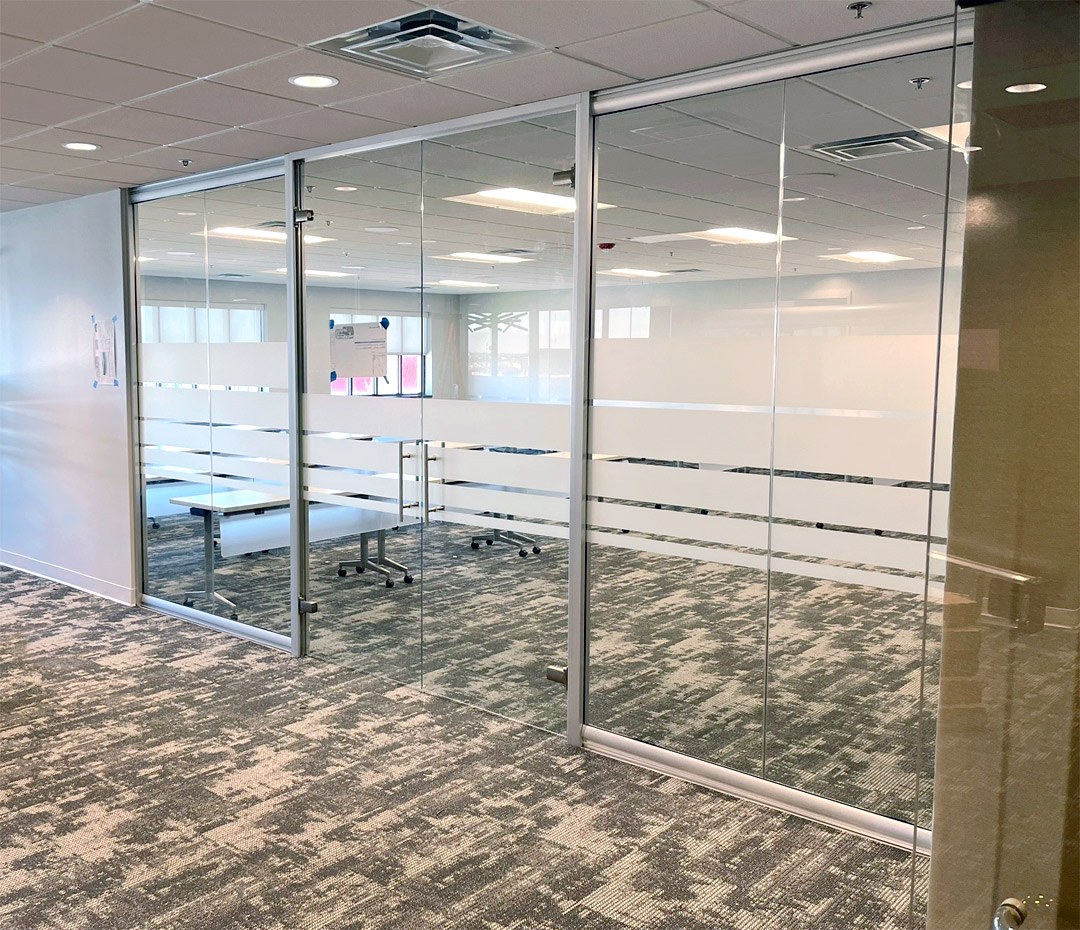
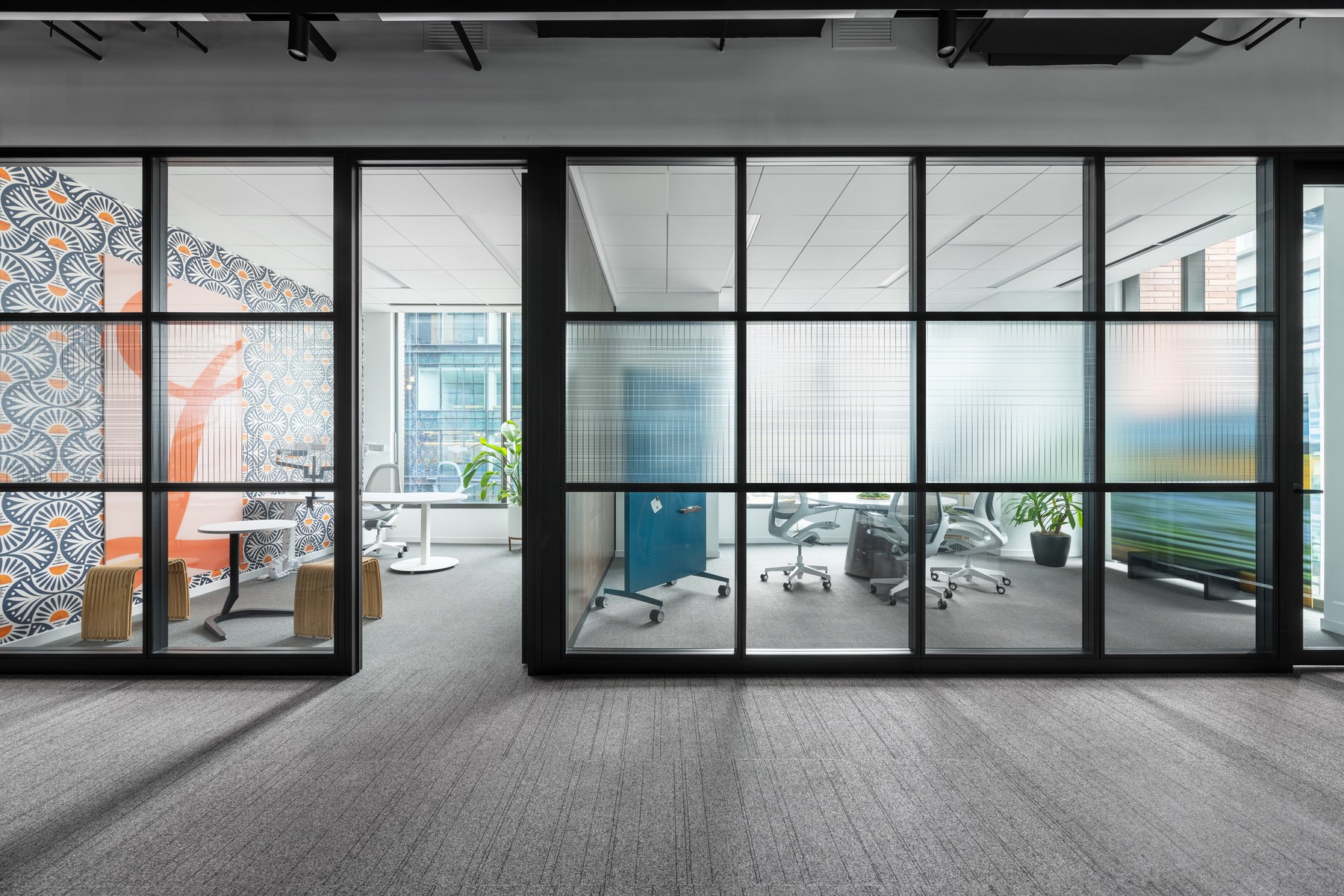
Acoustic glass walls use either double glazed panels, two layers of glass with a sealed air gap between them, or laminated glass with an acoustic interlayer, to reduce sound transmission through the wall. A single pane of standard tempered glass offers limited sound control on its own, no matter how thick it is, since sound travels easily through a single rigid surface. The acoustic performance comes from the air gap or interlayer, plus properly sealed edges and a frame system that doesn't leave gaps for sound to leak around.
One detail that gets missed often enough that it's worth stating plainly: a wall's sound rating only holds if the partition runs from the structural floor to the structural deck above, not just up to a suspended ceiling. Sound travels over the top of a ceiling-height wall through the plenum just as easily as through an open door. If acoustic performance is the reason you're calling us, we'll ask about your ceiling plenum before we talk glass.
This is the system for conference rooms, executive offices, HR offices, and any space where confidential conversations happen regularly. It's also worth considering for spaces near open collaborative areas where ambient noise needs to stay out, not just confidential conversation staying in.
If your priority is purely visual openness in a low-noise environment, standard frameless or demountable glass will cost less and look just as clean. Acoustic glass adds cost and weight for a benefit you may not need if sound isolation was never really the issue.
STC, or Sound Transmission Class, measures how much a partition reduces sound as it passes through. Higher numbers mean better sound blocking. A single pane of standard glass typically performs in a modest range, while a well sealed double glazed system can reach STC 50 or higher, which is generally considered suitable for confidential conversation privacy in most office settings. The rating only applies when the system is installed correctly and sealed at every edge, including the floor and ceiling connection, so installation quality matters as much as the glass spec itself.
Sunline's 800 Series offers both single and double pane glazing, with the double pane (10mm) configuration built specifically for conference rooms and private offices that need real sound reduction. NXT Wall's systems can also incorporate acoustic glass into a demountable frame when you need both sound control and the ability to reconfigure later.
Most offices aiming for confidential conversation privacy target STC 45 to 50 or higher. The right number depends on what's happening in adjacent spaces and how sensitive the conversations are, which we'll talk through for your specific layout.
Double glazed glass is visibly thicker than a single pane, since you're looking through two layers of glass with a gap between them, but it's still fully transparent. It doesn't have to look heavier or less modern than standard frameless glass.
Generally no, not without replacing the glass itself. Acoustic performance comes from the glass assembly, not an add-on, so retrofitting usually means swapping panels rather than modifying what's already installed.
We'll check your plenum, your layout, and tell you what rating you actually need.